











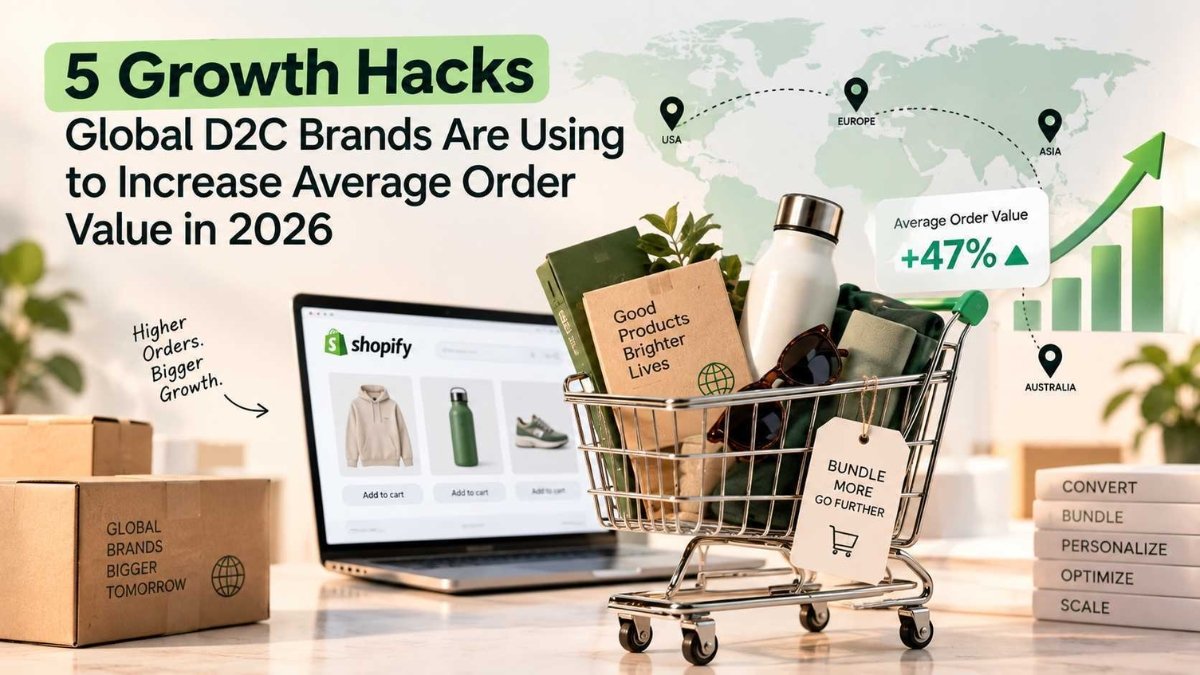
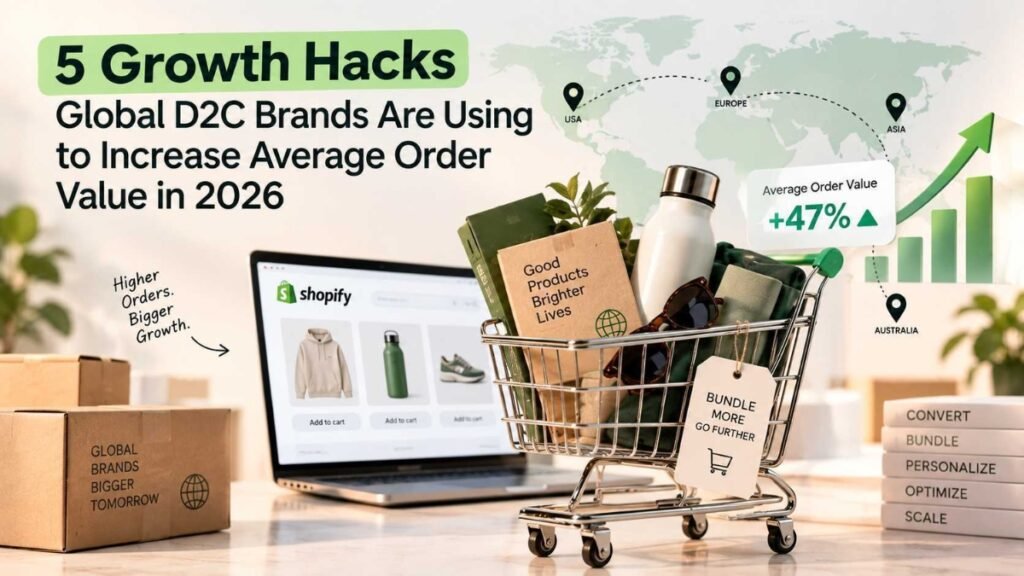
For years, the default growth playbook for D2C and Shopify-based brands looked the same: spend more on ads, chase more traffic, hope conversion rates hold up. But as ad costs keep climbing across Meta, Google, and now AI-driven discovery platforms, a growing number of e-commerce brands including several exporting out of India are shifting focus to a metric that’s cheaper to move and just as powerful: Average Order Value (AOV).
The logic is simple. If a brand can get existing customers to spend even 20-30% more per order, it grows revenue without touching its ad budget. No new customers to acquire, no additional traffic to buy just a smarter checkout experience for the shoppers already on the page.
Here are five tactics driving that shift in 2026.
1. Tiered “Buy More, Save More” Pricing
Instead of a flat discount code, brands are increasingly showing shoppers a tiered pricing table right on the product page: one unit at full price, two units at a modest discount, four units at a steeper one. The psychology is straightforward, once a shopper sees a better deal sitting one click away, skipping it starts to feel like leaving money on the table.
This tactic works especially well for consumable and repeat-purchase categories, supplements, skincare, coffee, candles, where customers are likely to reorder anyway. Brands that implement it well are seeing average order value increase from roughly one unit per order to two or more within weeks, translating into meaningful AOV gains without any change in traffic or ad spend.
2. BOGO and Threshold-Based Free Gifts
Buy-one-get-one offers remain one of the oldest tricks in retail, but their digital version has evolved. Rather than blanket sitewide discounts that train shoppers to wait for the next sale, brands are running “always-on” BOGO offers on specific product pages, buy two, get the third at half price; buy a yoga mat, get a carrying strap discounted.
Free-gift-with-purchase offers work on a similar principle but skip the discount entirely. A shopper who’s $6 short of a spending threshold is far more likely to add a small item to unlock a free gift than to abandon the cart altogether. Because the cost of a gift is usually much lower than an equivalent percentage discount, brands protect their margins while still giving the shopper a reason to spend more.
3. Curated and Mix-and-Match Bundling
eCommerce product bundling strategies have quietly become one of the highest-leverage AOV tactics for D2C brands selling into crowded categories like beauty, wellness, and apparel. Instead of asking a first-time customer to figure out what else they need, brands are doing the thinking for them, a “Morning Skincare Routine” bundle of cleanser, serum, and moisturiser, for instance, priced at a modest discount compared to buying each item separately.
The category matters here. Bundles built around a clear outcome; a routine, a starter kit, a “Work From Home Essentials” set consistently outperform bundles thrown together simply to clear excess inventory, because shoppers immediately understand why the products belong together.
What’s made this tactic accessible to smaller brands is the rise of no-code bundling apps for platforms like Shopify. A brand no longer needs a developer to build a bundle widget that sits natively on the product page; tools like Pumper let merchants configure quantity breaks, BOGO offers, free gifts, and mix-and-match bundles from a single dashboard, with the discount logic and design rendering directly inside the existing store theme. That guide breaks down which offer type tends to work best for which product category, useful reading for any founder trying to figure out where to start.
4. Native, On-Page Checkout Widgets
One recurring theme among brands getting AOV right in 2026 is where the offer actually appears. A discount buried in a banner or announced only at checkout is easy to miss; a widget placed between the product description and the “Add to Cart” button is not. Shoppers see the tiered pricing or bundle option at the exact moment they’re deciding how much to buy, not after they’ve already committed to a single unit.
This has pushed brands away from generic pop-ups and toward theme-native widgets that match a store’s existing fonts, colours, and spacing. The offer feels like a built-in part of the shopping experience rather than an ad bolted onto the page, which tends to convert better and irritate fewer customers.
5. Measuring AOV Per Offer, Not Sitewide
The final shift is less about the offer itself and more about how brands evaluate it. A sitewide AOV number can hide more than it reveals, it doesn’t tell a merchant whether the lift came from a bundle, a BOGO offer, or simply a seasonal spike in orders.
Brands running structured AOV programs are increasingly tracking performance offer-by-offer: impressions, add-to-cart rate, and incremental revenue attributed to each specific promotion. That data makes it possible to double down on what’s actually working and retire what isn’t, rather than guessing based on overall revenue trends. Publicly shared data from AOV-focused Shopify apps has shown extra revenue running into tens of millions of dollars across categories like health and beauty, home and garden, and apparel over just six months, a sign of how much upside is sitting untapped in checkout flows that haven’t been optimised.
The Bigger Picture
None of these tactics require a brand to reinvent its product or its marketing. They’re checkout-page and product-page decisions, often implementable in a single afternoon, that compound across every order a store processes. For Indian D2C exporters and Shopify sellers competing on tighter margins than their Western counterparts, that makes AOV optimisation one of the more accessible growth levers available right now: it doesn’t require a bigger ad budget, just a smarter shopping experience for the customers who are already there.
As acquisition costs keep rising industry-wide, expect more D2C brands, in India and globally, to treat AOV not as an afterthought, but as a core part of how they plan for growth in 2026 and beyond.